What is bakhoor? Bakhoor is pressed Arabian incense: small chips or cones of scented wood that are gently heated, not lit, to fill a home with fragrance. It smoulders on a hot coal, or on its own base in the modern cone form, and releases a soft, perfumed smoke that settles into curtains, sofas and clothes for hours. Across the Gulf it is the scent of welcome; in Malaysia it has become the scent of Friday, of Raya morning, and of a living room ready before the guests arrive.
The products in this guide
Free shipping · 7-day returns
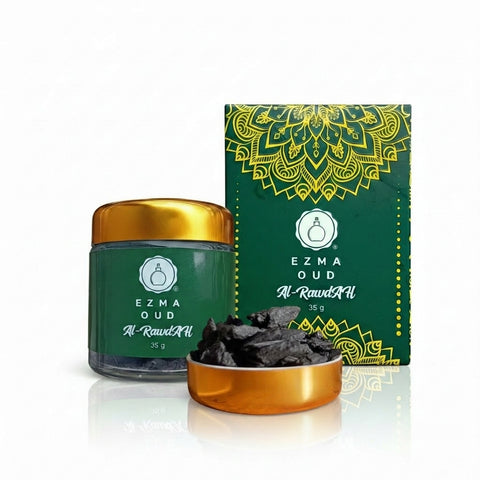 Bakhoor Al Rawdah 35g — Bukhoor Arab Raudhah, Luxury Arabian Home Incense★ 4.94 · 1608 reviewsRM55.90
View product
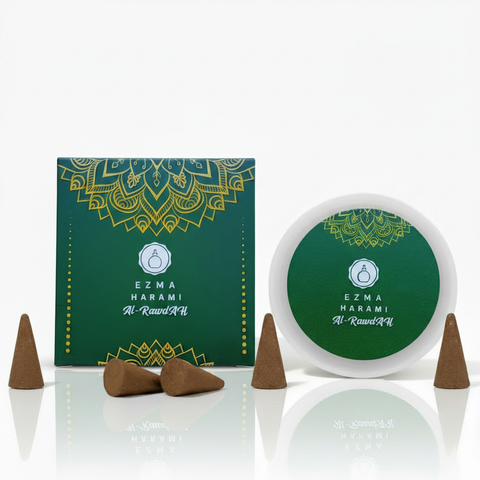 Bakhoor Al Rawdah Harami — Bukhoor Tanpa Arang, No-Charcoal Cones x12★ 4.95 · 644 reviewsRM39.90
View product
 Bakhoor Tayba Black 35g — Bukhoor Arab Deep Oud, Luxury Arabian Home Incense★ 4.93 · 1099 reviewsRM55.90
View product
Bakhoor in English and in Arabic: what the word means
There is no single word for bakhoor in English. The closest is "Arabian incense", but that misses the point that bakhoor is heated rather than burned with a flame. The bakhoor meaning comes from Arabic: the word is بخور (bakhūr), from a root meaning "to perfume with smoke", and it covers both the material and the act of scenting a room with it.
You will see it spelled many ways. Bukhoor is what most Malaysians type into a search bar, bukhur is another common form, and buhur is how it is written in Turkish. They all mean the same thing, and in Malay, bakhoor is simply "bukhoor". To pronounce bakhoor in English, say ba-KHOOR, with the "kh" in the throat, like the ch in "loch".
What is bakhoor made of?
The short answer: a blend. Traditional bakhoor starts with wood, commonly agarwood (oud, or gaharu in Malay) or other absorbent wood chips, mixed with natural resins and soaked in perfume oils such as rose, saffron, amber, musk, sandalwood and oud oil, then pressed into chips or shaped into cones. Every house keeps its own recipe, which is why two bakhoors with the same name can smell completely different.
A few distinctions help. Bakhoor is not an oil: attar and oud oil are worn on the skin, while bakhoor is heated. And it is not the same as loban or kemenyan, which are plain resins, although they are sometimes burned alongside it. Our own range is pressed bakhoor made in Saudi Arabia: wood, oud and perfume oils pressed into chips and cones.

History of bakhoor: where does it come from?
The origin of bakhoor lies in the Arabian Peninsula, along the old incense routes where frankincense, myrrh and aromatic woods were traded long before the modern perfume industry existed. Scenting a room with fragrant smoke was a sign of generosity: at the end of a gathering the host would pass a mabkhara, the bakhoor burner, among the guests so each guest left carrying the scent of the house.
The custom followed trade and faith across the Indian Ocean. Today bakhoor is loved in Malaysia, Indonesia, Brunei and Singapore: burned before Friday prayers, during Ramadan and Raya, at weddings, and simply to make a home smell wonderful. Perfuming the home and clothes is a well-loved tradition, and scholars generally regard scenting with bakhoor as permissible and part of the love of good scent; ask your local scholar for specifics.
Types of bakhoor
Once you know what bakhoor incense is, the surprise is how many forms it takes:
- Chips in a jar: the classic, heated on a coal in a mabkhara. Our 35g jars come with a charcoal roll and give 8–10 hours of scent per session, roughly 4–6 weeks per jar.
- Self-igniting cones: the no-charcoal form. Light the tip with a lighter and the cone smoulders for 20–30 minutes while the scent holds for 18+ hours. Our Bakhoor Harami cones come 12 to a box.
- Powder and paste: sprinkled on coal; the Emirati style called dakhoon is one example.
- Sticks: bakhoor paste on a stick, lit like incense sticks.
At EZMA OUD we sell the first two. A "bakhoor set" usually means a jar or box plus what you need to heat it, so our jars ship with the charcoal already inside, and our sets include the lighter too.
 Bakhoor Al Rawdah Harami — Bukhoor Tanpa Arang, No-Charcoal Cones x12
View product
What is bakhoor used for?
For the home: one chip and the living room feels settled and warm within minutes. For guests: light it before they arrive and the welcome is done before you say a word. Bakhoor for clothes: hold a baju or tudung loosely above the smoke and the fabric keeps a soft trail for a day or more. Many light it before prayers or on a Friday, and because it comes boxed it makes an easy, thoughtful gift.
Bakhoor vs oud vs kemenyan
Oud is agarwood (the resin-rich wood) or its oil: an ingredient. Bakhoor is the finished blend of wood, resin and oils, made to be heated. Kemenyan is a plain resin with a traditional smoke that smells nothing like bakhoor. If you have only ever smelled kemenyan or colok, expect something rounder, sweeter and much closer to a perfume. Full comparison: bukhoor vs kemenyan.
How to choose your first bakhoor
What does bakhoor smell like? It depends on the blend: oud-forward bakhoor is warm, woody and smoky; rose blends are soft and romantic; musk blends are clean and fresh. Most first-time buyers start with the rose-led bakhoor Al Rawdah (rose, saffron, amber, patchouli and oriental oud), reminiscent of the Raudhah scent. If you would rather skip charcoal, begin with the cones. Our jars give a low, soft smoke, no dizziness, no headache, and every order ships free across West Malaysia with free returns within 7 days, even after burning. Compare scent by scent in which bakhoor smells best.
Frequently asked questions
What is bakhoor?
Pressed Arabian incense: chips or cones of scented wood, resin and perfume oil that are heated, not lit, to release a fragrant smoke for the home, clothes and gatherings.
What is bakhoor called in English?
There is no exact English word; "Arabian incense" is the closest. Most English speakers simply use the Arabic word, bakhoor.
What is bakhoor in Arabic?
بخور, from a root meaning to perfume with smoke; every spelling you see online points back to this one word.
What is bakhoor made of?
A pressed blend of wood chips (often agarwood), natural resins and perfume oils such as rose, saffron, amber, musk and oud. Exact recipes differ from maker to maker.
What is bakhoor used for?
Scenting the home, welcoming guests, perfuming clothes and hair, marking Fridays, Ramadan and Raya, and giving as a gift.
What is the difference between bakhoor and oud?
Oud is a single ingredient, agarwood or its oil; bakhoor is a finished blend of woods, resins and oils, made to be heated rather than worn.
How do I use bakhoor?
Place a chip on a glowing coal in a heat-resistant burner, or light a self-igniting cone on a heat-resistant dish. Ventilate, never leave it unattended, and keep it away from children and pets. Step by step: how to burn bakhoor.
What is a bakhoor burner called?
A mabkhara. Any heat-resistant dish will do for cones; chips need a burner that can hold a coal.
Ready to smell it for yourself? Shop bakhoor at EZMA OUD: made in Saudi Arabia, free shipping across West Malaysia, and free returns within 7 days even after burning.
Further reading: what is oud and bakhoor · the types of bakhoor: chips, cones, sticks and powder · how bakhoor reached Nusantara · bakhoor scent notes explained · is bakhoor sunnah?.
