The history of bakhoor in Southeast Asia is a story of the sea, not of one place — the scent travelled the way so much else did, carried across the Indian Ocean by traders and by pilgrims coming home from the Hijaz. Long before it had a name in Malay ears, bakhoor (also written bukhoor, bukhur or buhur) was already part of daily life in Arabia, burned in homes and gathering places to mark hospitality and prayer. What arrived in the Malay world over the centuries was not a replacement for local scent traditions but an addition to them — one that eventually became a favourite of its own. This guide traces where bakhoor originated, how it reached Malaysia, and why the habit of burning it before guests, on Fridays, and during Ramadan has lasted so well.
The products in this guide
Free shipping · 7-day returns
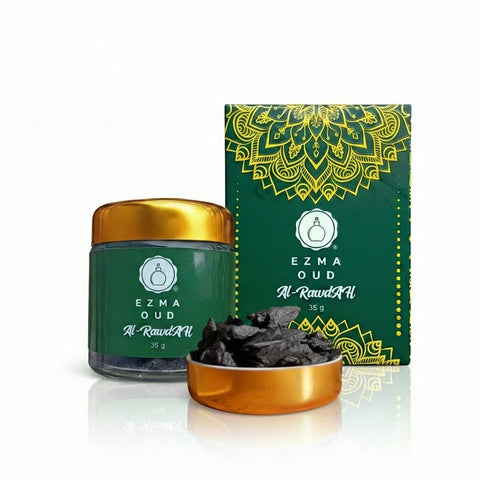 Bakhoor Al Rawdah 35g — Bukhoor Arab Raudhah, Luxury Arabian Home Incense★ 4.94 · 1608 reviewsRM55.90
View product
Bakhoor Al Rawdah 35g — Bukhoor Arab Raudhah, Luxury Arabian Home Incense★ 4.94 · 1608 reviewsRM55.90
View product
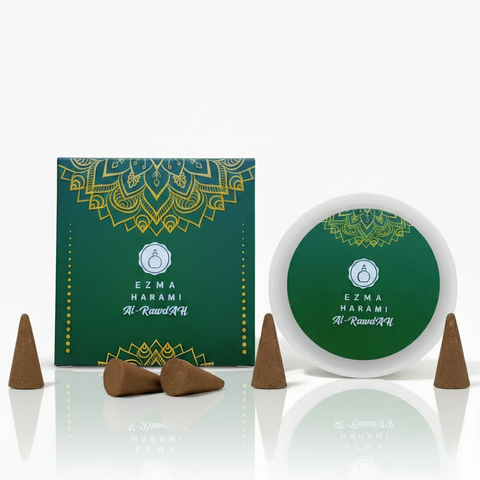 Bakhoor Al Rawdah Harami — Bukhoor Tanpa Arang, No-Charcoal Cones x12★ 4.95 · 644 reviewsRM39.90
View product
Bakhoor Al Rawdah Harami — Bukhoor Tanpa Arang, No-Charcoal Cones x12★ 4.95 · 644 reviewsRM39.90
View product
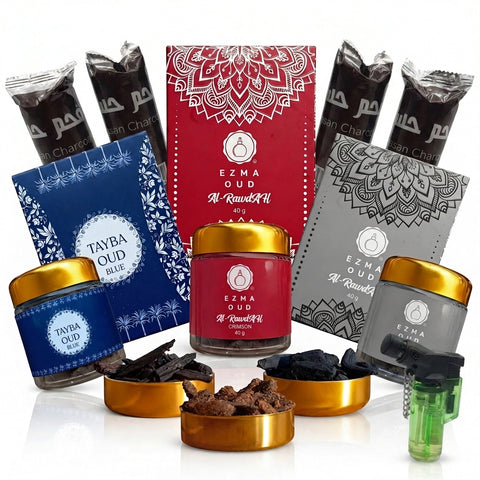 The Discovery Trio — Bakhoor Silver + Tayba Blue + Crimson★ 4.96 · 244 reviewsRM139.90
Long before bakhoor: kemenyan and gaharu in the Malay world
The Malay Archipelago had its own incense culture centuries before Arabian bakhoor arrived. Kemenyan (benzoin resin) was burned across the region in ceremonies and everyday life, and gaharu — agarwood — grew wild in the forests of Sumatra, Borneo and the Malay Peninsula, prized and traded long before it ever reached the Middle East. Nusantara was, in fact, one of the world's great sources of agarwood, and traders carried it outward for centuries. So when bakhoor eventually reached these shores, it joined an audience that already understood the value of good scent — it did not need to explain the idea, only add a new blend to it. If you want to see how the two traditions differ today, our guide on bakhoor versus kemenyan compares them side by side.
How trade and pilgrimage carried bakhoor across the Indian Ocean
For centuries, the Indian Ocean was a highway, not a barrier. Arab, Indian and local traders moved along its monsoon winds between the Arabian Peninsula, the Indian subcontinent and the ports of the Malay world, and with their goods came ideas — including the custom of scenting the home with bakhoor. Pilgrims travelling to and from the Hijaz for Hajj and Umrah added their own thread to this story: returning home, many brought back bakhoor and other scented goods as oleh-oleh, gifts for family and neighbours that carried a little of the journey with them. A jar or box of bakhoor from the Holy Land was a meaningful, personal gift long before it was something you could simply order online. Over generations, this steady traffic of traders and pilgrims meant the scent stopped being a novelty and became familiar — something aunties kept in the cupboard for Friday, not a curiosity from abroad.
Why the Arabian blend became a Malaysian habit
A scent only survives one journey; it needs a reason to stay. Bakhoor found several in the Malay world. Malaysian homes are famously guest-ready — tetamu can arrive any evening, and a home that smells cared for says more than words can. Bakhoor answered that need perfectly: burn it in the living room an hour before Maghrib, and by the time anyone knocks, the house already feels welcoming. The tropical climate helped too — in humid weather, closed rooms can hold onto damp, stale smells, and a good bakhoor session pushes that out and leaves something warmer behind. And Malay homes are, by tradition, full of fabric — langsir at every window, cushions, mats, sofa covers — the kind of soft furnishings that hold fragrance for hours after the smoke has cleared. Between hospitality, humidity and fabric, bakhoor found a home that suited it almost as well as the one it came from.
Bakhoor in the Malaysian home today
Centuries on, the habit is still very much alive. Friday remains the day most associated with bakhoor in Malaysian homes — many families burn it before or after Friday prayers, a small weekly ritual that has outlasted plenty of newer trends. During Ramadan, bakhoor sees even more use, scenting the house before iftar and through the nights of taraweeh. Weddings and kenduri lean on it heavily too: a scented hall, a hantaran tray with a jar tucked among the fabric, a mabkhara passed quietly around a room of guests. What has changed is the format. A generation that grew up with a charcoal burner and a careful hand now often reaches for a self-igniting cone instead — light it, set it down, and walk away, no watching required. It suits apartment living especially well, where a quick 20 to 30 minutes of scent that holds for hours matters more than a long ceremonial burn. The scent is the same story; the delivery has simply caught up with how Malaysians actually live now. If you are still deciding what pressed bakhoor even is before reading further into its story, our guide on what is bakhoor is a good place to start, and our note on bakhoor and Islam covers the religious customs around it in more depth.
 Bakhoor Al Rawdah 35g — Bukhoor Arab Raudhah, Luxury Arabian Home Incense
View product
Bakhoor Al Rawdah 35g — Bukhoor Arab Raudhah, Luxury Arabian Home Incense
View product
Frequently asked questions
Where did bakhoor originate?
Bakhoor originated in the Arabian Peninsula, where scenting the home and clothes with fragrant smoke has been a loved custom for centuries. It reached Southeast Asia later, carried by traders and pilgrims across the Indian Ocean.
How did bakhoor reach Malaysia?
Mainly through trade routes across the Indian Ocean and through pilgrims returning from Hajj and Umrah, who often brought bakhoor home as a gift. Over generations, an occasional gift became a household habit.
Is bakhoor originally Malay or Arab?
Bakhoor itself is Arab in origin. What is genuinely local to the Malay world is the older incense culture it joined — kemenyan and gaharu, both used here long before Arabian bakhoor arrived.
What did Malaysians burn before bakhoor?
Kemenyan (benzoin resin) was the everyday incense across the Malay Archipelago, alongside gaharu, the fragrant agarwood that grew wild in the region's own forests and was traded outward for centuries.
Why is bakhoor burned on Fridays?
Friday is the week's main day of communal prayer, and scenting the home for it became a small weekly tradition — burn it before or after prayers so the house stays fragrant for the rest of the day.
Is the tradition still alive with young Malaysians?
Yes — it has simply changed shape. Many younger households prefer a self-igniting cone over a charcoal burner because it suits apartment living, but burning bakhoor for guests, Fridays and Ramadan remains just as common.
Did agarwood (gaharu) come from Southeast Asia originally?
Yes — agarwood is native to the forests of Sumatra, Borneo and the Malay Peninsula, and the region was one of the world's great sources of it long before bakhoor arrived from Arabia.
Curious to try the scent that made this journey? Browse our bakhoor collection — pressed bakhoor made in Saudi Arabia, with free shipping across West Malaysia (Sabah & Sarawak free from RM80) and free returns within 7 days even after burning.
