Search for "bakhoor sunnah" and you are really asking one question: does perfuming the home with bakhoor have a place in Islamic tradition? It does. The love of good scent is one of the best-known customs of Islam, and perfuming the home, the clothes and the place of prayer is cherished from Makkah to Kuala Lumpur. This guide explains bakhoor in Islam plainly: where the habit comes from, what scholars generally say, its benefits at home, and when Malaysians burn it. We describe custom, not rulings. Whether you spell it bukhur or buhur, the answers are the same.
The products in this guide
Free shipping · 7-day returns
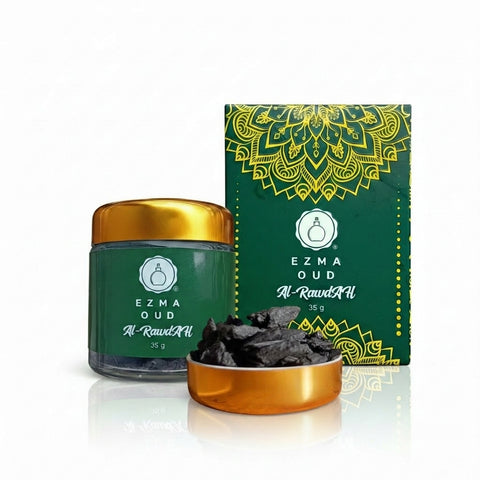 Bakhoor Al Rawdah 35g — Bukhoor Arab Raudhah, Luxury Arabian Home Incense★ 4.94 · 1608 reviewsRM55.90
View product
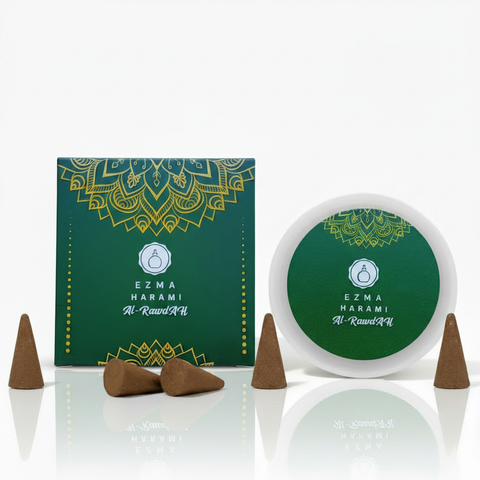 Bakhoor Al Rawdah Harami — Bukhoor Tanpa Arang, No-Charcoal Cones x12★ 4.95 · 644 reviewsRM39.90
View product
 The Icons Duo — Bakhoor Al Rawdah + Tayba Black★ 4.92 · 237 reviewsRM94.90
Where the tradition comes from
Burning fragrant wood is one of the oldest ways humans have scented a space. In the Arabian Peninsula, agarwood and fragrance oils were burned in a mabkhara to welcome guests and mark an occasion. Through traders and pilgrims returning from Hajj and Umrah, the habit travelled to Southeast Asia and merged with local custom, which already prized a clean and fragrant home.
That is why, for many Malaysian families, the smell of bakhoor is foreign in origin yet familiar from a grandmother's house and every kenduri. New to bakhoor? Start with what is bakhoor.
Is bakhoor sunnah?
"Sunnah" refers to the way of the Prophet (peace be upon him). What is taught everywhere is that cleanliness and good scent are loved in Islam and that perfuming oneself is part of that way. Bakhoor is one of the oldest means of doing exactly this, which is why so many people simply say bukhoor is sunnah.
Is burning bakhoor sunnah in itself, or better described as a good custom in the spirit of the sunnah? That is a distinction scholars discuss, and we will not settle it for you. We do not quote hadith we cannot verify and we do not issue fatwas; ask your local scholar for specifics. What we can say is that scenting the home is an old, widespread and warmly regarded tradition.
Is bakhoor allowed in Islam?
Yes, in the general view. Scholars generally regard scenting with bakhoor as permissible and part of the love of good scent; it is used daily in the great mosques and in countless homes and suraus across Malaysia. Bakhoor is fragrance, nothing more, not a charm.
A few situations have their own rules, for example scent while in ihram. Those are questions for your local scholar, not a bakhoor shop. For daily life at home, perfuming the space before guests and before prayer is a well-loved, uncontroversial habit.
Why burn bakhoor? The benefits of bakhoor at home
The bakhoor benefits Malaysian families mention most are not spiritual cures, just the ordinary comfort of a good-smelling house.
- The house feels fresh within minutes. The smoke moves through the whole space, not one corner the way a spray does.
- It clings to fabric. Curtains, sofas, telekung and baju hold the scent far longer than the air does, which is why many people scent their prayer clothes with it.
- It welcomes guests. Burning bakhoor before guests arrive is a quiet way of saying the house is ready for them.
- It calms the mood. Many families burn it after Maghrib or before bed to close the day. Our jars give a low, soft smoke, so no dizziness and no headache.
- It covers unwanted smells, cooking, damp and mustiness after rain, and holds memories: the oud bakhoor benefits people describe most are Raya morning, a wedding, the surau on a Friday.
When Malaysians burn it most
- Thursday evening and Friday morning, the most widely kept rhythm in Malaysia, as home and clothes are readied for Friday.
- Before guests arrive, 10 to 15 minutes ahead.
- After cleaning the house, as the finishing touch.
- Before prayer, a brief burn near the prayer corner, then extinguish.
- Evenings, after cooking and before bed: burn briefly and let the room keep the rest.
- Ramadan, Raya and gatherings, kenduri, weddings and open houses.
 Bakhoor Al Rawdah 35g — Bukhoor Arab Raudhah, Luxury Arabian Home Incense
View product
Simple etiquette worth keeping
- Do not overdo it. One small piece is enough for a room.
- Think of guests sensitive to smoke: burn ahead of their arrival and ventilate afterwards.
- Never leave an ember unattended, use a heat-resistant dish, and keep it away from children and pets.
- Around pregnancy, babies or asthma, ventilate and keep the amount modest. If in doubt, ask your doctor.
Starting out
A rose-led scent is the easiest for a whole household to accept. Bakhoor Al Rawdah is pressed bakhoor made in Saudi Arabia with notes of rose, saffron, amber, patchouli and oriental oud, and recalls the Raudhah scent pilgrims remember; more on that in what does Raudhah smell like. Each 35g jar comes in its own box with a charcoal roll, scents a room for 8 to 10 hours per session and lasts 4 to 6 weeks. Shipping is free across West Malaysia, and returns are free within 7 days, even after you have burned it.
Frequently asked questions
Is bakhoor sunnah?
Love of good scent is well-established in Islamic tradition, and bakhoor is one of the oldest ways of perfuming. Whether burning it is itself a sunnah act or a good custom in that spirit is a question for your local scholar.
Is bakhoor allowed in Islam?
Scholars generally regard scenting with bakhoor as permissible and part of the love of good scent. It is used daily in mosques and homes; for specific situations such as ihram, ask your local scholar.
What is the hukum (ruling) on burning bakhoor?
We do not issue a hukum. The general view is that burning fragrant bakhoor is permissible and loved; for your circumstances, ask a religious authority you trust.
What are the benefits of bakhoor in Islam?
Simply a clean, pleasant-smelling body, home and prayer space, regarded as good manners toward yourself, your guests and your place of worship. No spiritual cures are involved.
What does "wangian sunnah" mean?
It is the Malay phrase for scents linked with the Prophet's love of good fragrance, such as oud, musk and rose. Malaysians use it loosely for bakhoor, attar and other traditional perfumes.
When is the best time to burn bakhoor?
Thursday evening or Friday morning, before guests arrive, after cleaning, and in the evening before bed. There is no required time; these are simply the moments it works best.
Can I burn bakhoor before prayer?
Yes. Many families scent the prayer corner and prayer clothes a few minutes beforehand, then extinguish it so the room is fragrant but smoke-free during prayer.
What is bakhoor used for in Islam?
To perfume homes, clothes, mosques and gatherings, to welcome guests, and to mark Friday, Ramadan and Raya. It is a fragrance custom, not a religious object.
Ready to bring the tradition home? Browse all EZMA OUD bakhoor, made in Saudi Arabia and delivered free across West Malaysia.
Further reading: bakhoor for Ramadan and Raya · bakhoor as an umrah gift.
