There are four common types of bakhoor: pressed chips burned on charcoal, self-igniting cones and tablets, incense sticks, and loose powder for electric burners. All four aim at the same warm Arabian scent that fills a room and settles into curtains and clothes, but they differ a great deal in how long they last, how much smoke they make and how much effort they ask of you. This guide compares them so you can pick the right one for your home. EZMA OUD makes only two of them, chips in jars and cones, and we say clearly which forms we do not sell. If you are still asking what is bakhoor in the first place (some write it buhur), start there and come back.
The products in this guide
Free shipping · 7-day returns
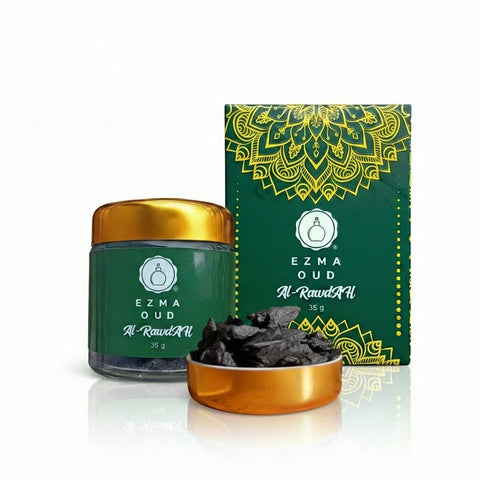 Bakhoor Al Rawdah 35g — Bukhoor Arab Raudhah, Luxury Arabian Home Incense★ 4.94 · 1608 reviewsRM55.90
View product
Bakhoor Al Rawdah 35g — Bukhoor Arab Raudhah, Luxury Arabian Home Incense★ 4.94 · 1608 reviewsRM55.90
View product
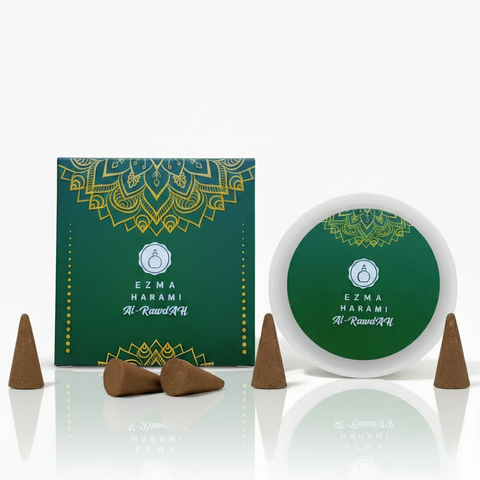 Bakhoor Al Rawdah Harami — Bukhoor Tanpa Arang, No-Charcoal Cones x12★ 4.95 · 644 reviewsRM39.90
View product
Bakhoor Al Rawdah Harami — Bukhoor Tanpa Arang, No-Charcoal Cones x12★ 4.95 · 644 reviewsRM39.90
View product
 Two Ways Ritual — Al Rawdah Bakhoor Jar + Harami Cones★ 4.96 · 197 reviewsRM84.90
Bakhoor chips: the classic pressed bakhoor in a jar
Bakhoor chips, which many people search for as "bakhoor wood chips" or bakhoor oud incense chips, are the form most Malaysians picture when they hear the word. Fine wood, resins, fragrance oils and natural powders are blended and pressed into small, slightly sticky pieces, then packed into a jar. This is the traditional form used in Saudi homes, and it is exactly what our oud bakhoor chips are: pressed bakhoor made in Saudi Arabia, 35g in a glass jar with its own box.
Chips need heat from underneath. Light a charcoal disc, wait until it turns grey, then place one or two chips on top; every jar we ship comes with a charcoal roll. One session gives 8–10 hours of scent and a jar lasts around 4–6 weeks. The smoke from our jars is low and soft, does not sting the eyes, and customers report no dizziness and no headache even in a closed living room. This is the strongest, longest-lasting and best-value type of the four. Read how to burn bakhoor for the step-by-step.
A note on names: "bakhoor perfume chips" and "bakhoor incense chips" mean the same pressed product. "Malaysian oud chips" usually means plain agarwood pieces burned on their own, a different product that we do not sell.

Bakhoor cones and bakhoor tablets: no charcoal needed
Bakhoor cones are the modern, fuss-free type. The same fragrant paste is shaped into a small cone with a built-in ignition layer, so you light the tip and it burns on its own. No charcoal, no waiting, no tongs. Bakhoor tablets, also sold as bakhoor incense tablets, bakhoor oud tablets or, in Indian shops, tikki, work the same way but are flat discs. Some write it "bukhoor cone" or bukhur, and shops abroad list bakhoor incense cones; it is all the same thing.
Our bakhoor cones are the Harami range: 12 cones per box, self-igniting. One cone burns for 20–30 minutes and the scent holds for 18+ hours. They come in seven scents including Al Rawdah, Tayba, Kayan and Dylaa, so anyone hunting for oud bakhoor cones or a rose-led cone will find one. Cones are what we recommend for apartments, offices and anyone who finds charcoal a hassle.

Bakhoor incense tablets: how to use them
If you are wondering how to use bakhoor tablets or how to burn bakhoor tablets without charcoal, the routine is short. Place the tablet or cone on a heat-resistant dish, light the tip, let it flame for a few seconds, then blow it out so it glows and smokes. Keep a window slightly open and keep it away from children, pets and anything flammable. Do not put a self-igniting cone on charcoal; it will only burn out faster. One more source of confusion: "bakhoor charcoal tablets" are not bakhoor at all, they are the charcoal discs you burn chips on.
Bakhoor incense sticks and dhoop sticks
A bakhoor stick is an incense stick scented in the Arabian style, usually oud, rose, amber or musk. Bakhoor incense sticks come in two builds. The thin bamboo-core stick sits in a holder, is cheap, burns 30–45 minutes and gives a light scent. The dhoop stick is thicker, made from incense paste without a bamboo core, and gives denser smoke and a stronger throw. Shops list them as bakhoor oud sticks, oud bakhoor incense sticks or "bakhoor premium incense sticks", and bakhoor and incense sticks often share a shelf, which is where the confusion starts.
Sticks are the easiest to start with and the cheapest to buy, but the scent is thinner and does not cling to fabric the way pressed chips do. Many contain a lot of wood filler, which is why some smell closer to colok than to Arabian bakhoor. To be clear, EZMA OUD does not sell bakhoor sticks or dhoop sticks; we describe them so you can compare fairly.
Bakhoor powder for electric burners
Bakhoor powder, sometimes listed as bakhoor incense powder or oud bakhoor powder, is the loose, granular form: the same blended ingredients as chips, left unpressed so it can be spooned onto a hot surface. It is the form most people use with an electric burner; the plate heats, the powder releases scent with no flame or charcoal, and you switch it off once the room is scented. It can also go on charcoal, but it burns fast and smells scorched if the charcoal is too hot.
Because it is loose, powder is messy to measure and easy to waste. It suits people who already own an electric burner and like to control the amount. We do not sell bakhoor powder; a small piece of pressed chip works on most electric burners too.
Chips vs cones vs sticks vs powder: quick comparison
Whether you are hunting for the best bakhoor chips or the best bakhoor sticks, judge the form first and the brand second.
- Scent strength: chips are strongest and deepest, then powder, then cones, then sticks. Our jars give 8–10 hours per session; our cones hold scent for 18+ hours after a 20–30 minute burn.
- Convenience: cones and sticks light in seconds. Chips need a charcoal disc to turn grey first (about ten minutes). Powder needs an electric burner or charcoal.
- Smoke: sticks and dhoop are visibly smoky; chips on well-lit charcoal give a low, soft smoke; cones give a short burst; powder on an electric burner gives almost none.
- Cost per session: chips are the best value, because one small piece scents a whole evening and a jar lasts 4–6 weeks. Cones cost more per session but save the charcoal. Sticks are cheapest per stick but you need several to match one chip. Powder sits in the middle.
- Scent that lingers on clothes and curtains: chips, then powder, then cones. Sticks are mostly for the air.
Which type of bakhoor should you choose?
First-time buyer: start with cones. There is nothing to learn, any lighter will do, and within half an hour you will know whether you like the scent. If you already love Arabian scents, go straight to a jar of chips; the charcoal roll is included and the routine takes one evening to learn.
Apartment or condo: cones or chips. Keep a window ajar, use a heat-resistant dish, never leave either unattended. Our jars are the ones customers burn in closed rooms without complaints of dizziness or headache.
Majlis, kenduri or Friday gathering: chips on charcoal, without question. Guests notice the difference, and one jar covers weeks of gatherings.
Gifting: a jar of chips in its own box looks the part; a box of cones is the safer gift for someone who has never used charcoal. If you are deciding between scents rather than forms, see which bakhoor smells best.
Frequently asked questions
What types of bakhoor are there?
Four main types: pressed chips in jars, self-igniting cones and tablets, incense and dhoop sticks, and loose powder for electric burners. Chips and cones give the true Arabian home scent; sticks and powder are lighter, budget alternatives.
Bakhoor chips vs cones: which is better?
Chips win on strength, duration (8–10 hours a session) and cost per session. Cones win on convenience: no charcoal, done in 20–30 minutes, scent holding for 18+ hours. Many customers keep both, chips for the weekend and cones for weekdays.
What are bakhoor sticks?
Incense sticks scented with Arabian notes such as oud, rose or amber. Thin bamboo-core sticks are light and cheap; dhoop sticks are thicker and smokier. EZMA OUD does not sell sticks.
What is bakhoor powder used for?
It is spooned onto an electric burner or hot charcoal to scent a room quickly, and suits people who own an electric burner and want to control the amount. We do not sell powder.
Which type of bakhoor lasts longest?
Pressed chips. One session on charcoal gives 8–10 hours of scent and a 35g jar lasts about 4–6 weeks. Cones come second, holding scent for 18+ hours after a short burn.
Can I burn bakhoor cones on charcoal?
There is no need. Self-igniting cones have their own ignition layer; light the tip, blow out the flame and set it on a heat-resistant dish. Charcoal only makes it burn out faster.
What is bakhoor tikki?
Tikki is the Indian name for a small, flat pressed disc of incense, the same idea as a bakhoor tablet. It is self-igniting and used exactly like a cone.
Which type of bakhoor is easiest to use?
Cones. Light, blow out, done. Our Harami cones need no charcoal and no burner — just a lighter and a heat-resistant dish.
Ready to choose? Browse our bakhoor chips for the classic charcoal ritual or our bakhoor cones for the no-charcoal option. Every order ships free across West Malaysia (Sabah and Sarawak free from RM80) and can be returned free within 7 days even after burning it. Rated 4.9★ by hundreds of verified buyers.
Further reading: bakhoor scent notes explained · how to store bakhoor in humid weather.
