A bakhoor burner is the dish that holds the heat under your bakhoor: a traditional charcoal mabkhara, an electric bakhoor burner, or simply a heat-resistant plate for a cone that lights itself. Mabkhara (in English, an incense burner) covers all three. One thing to say plainly first: EZMA OUD does not sell burners or charcoal separately. Every 35g jar of our pressed bakhoor made in Saudi Arabia comes with a charcoal roll in the box, any heat-resistant dish you own will do, and our Harami cones need no burner at all.
The products in this guide
Free shipping · 7-day returns
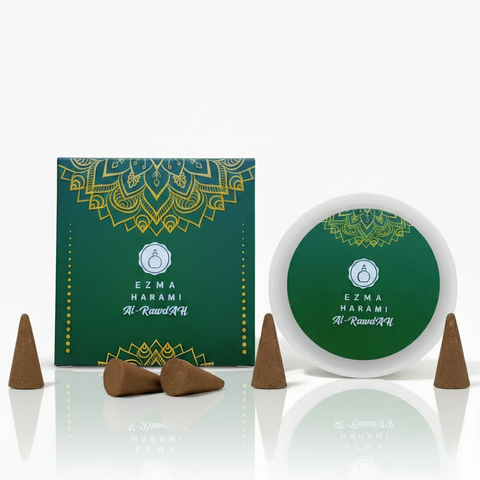 Bakhoor Al Rawdah Harami — Bukhoor Tanpa Arang, No-Charcoal Cones x12★ 4.95 · 644 reviewsRM39.90
View product
Bakhoor Al Rawdah Harami — Bukhoor Tanpa Arang, No-Charcoal Cones x12★ 4.95 · 644 reviewsRM39.90
View product
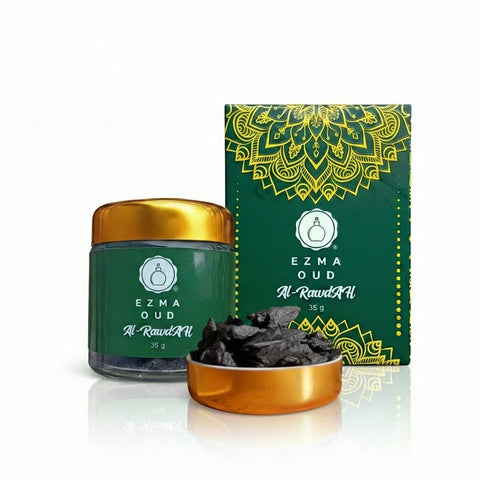 Bakhoor Al Rawdah 35g — Bukhoor Arab Raudhah, Luxury Arabian Home Incense★ 4.94 · 1608 reviewsRM55.90
View product
Bakhoor Al Rawdah 35g — Bukhoor Arab Raudhah, Luxury Arabian Home Incense★ 4.94 · 1608 reviewsRM55.90
View product
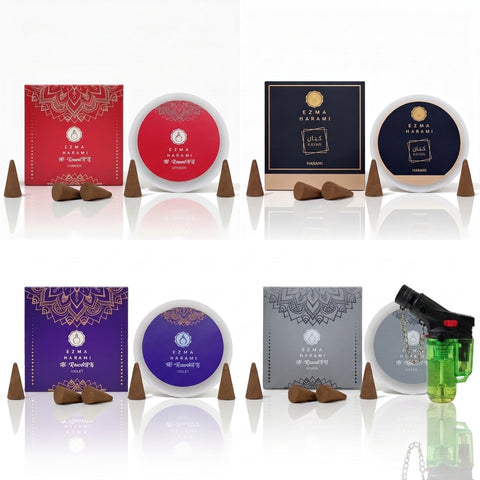 The Harami Collection — 4 Scents No-Charcoal Cones★ 5.0 · 228 reviewsRM139.90
Types of bakhoor incense burner: wooden, brass, ceramic and electric
A traditional mabkhara is a small cup on a base, open or with a lid, where a lit charcoal disc sits. The classic Saudi shape is a square wooden base with a metal-lined cup; listings call it "bakhoor burner Saudi style". A wooden bakhoor burner (often written "bakhoor burner wooden" in marketplace titles) looks lovely on a shelf but must be metal-lined inside, or the heat scorches the wood. A brass mabkhara takes heat well and wipes clean; one with a handle is easier to carry between rooms. Ceramic burners are cheap and work well if the bowl is thick.
An electric bakhoor burner replaces charcoal with a small heated plate. It plugs into the wall (a bakhoor USB burner runs from a power bank), warms in a minute or two, and takes a pinch of powder or a small chip straight on the plate. No charcoal smoke and nothing to light, which is why many apartment dwellers choose it. The trade-off is a softer, shorter throw and a plate to clean after every use.
Bakhoor stand and bakhoor holder: what the words mean
A bakhoor stand is a tall frame, like an open cage or tripod, with the burner underneath, so you can drape a baju or tudung over it; a Saudi bakhoor stand is usually carved wood or metal. A bakhoor holder is most often just another name for the burner, or for the little metal cup inside a mabkhara that holds the charcoal.
How to use a mabkhara with charcoal, step by step
- Set the mabkhara on a heat-resistant surface, away from curtains and out of reach of children and pets.
- Hold a charcoal disc with tongs and light its edge. Quick-light discs spark for a few seconds; that is normal. Place it in the cup.
- Wait until the disc is covered in grey ash; a black disc is too hot and makes bakhoor smell burnt.
- Put one or two small chips on the ash, not a handful. A fingernail-sized piece of pressed bakhoor is enough.
- Add another chip when the first has finished. One session with our jars scents the room for 8–10 hours, and a jar lasts 4–6 weeks.
- Let the disc burn out on its own or drop it in water. Never tip a warm disc into the bin.
Whether you call it bukhoor, bukhur or buhur, the method is the same. Our guide on how to burn bakhoor goes deeper into amounts and timing.

How to use an electric bakhoor burner
Switch it on and let the plate warm for a minute or two. Place a very small piece of bakhoor on the plate, no bigger than a pea for pressed bakhoor like ours. Keep the heat low if your model has a dial: high heat scorches pressed bakhoor and gives a harsh smell instead of soft rose and oud. When the scent fades, switch off, let the plate cool and wipe it with a dry tissue. A plate crusted with old resin is the usual reason an electric bakhoor burner "stops working", so check that before you blame the cable.
Bakhoor charcoal: quick-light discs or natural bakhoor coal?
Quick-light bakhoor charcoal tablets are the round discs sold in foil rolls; a little saltpetre makes them catch from a lighter within seconds. This is the type packed with every EZMA jar. Natural charcoal, from coconut shell or wood, has no additives and skips that first whiff of sulphur, but needs a gas flame or torch and more patience. For daily use, quick-light discs are simpler; for a long majlis, some hosts prefer natural bakhoor coal because it burns more evenly.
Charcoal safety indoors is simple but not optional: open a window, never leave a burning disc unattended, keep it away from children and pets, and always use a heat-resistant dish. Our article on whether bakhoor is safe answers the ventilation, pregnancy and asthma questions honestly.
No burner at all: self-igniting Harami cones
If the charcoal routine feels like too much, there is a third way. Our Harami no-charcoal bakhoor cones light with any lighter, sit on any heat-resistant saucer, burn for 20–30 minutes and leave a scent that holds for 18+ hours. Each box has 12 cones. This is the closest thing to bakhoor without a burner, and our most popular choice for small apartments.

Choosing a bakhoor burner for a Malaysian home
Apartment or condo: an electric burner or Harami cones; both keep smoke low. Family with young children: a heavy ceramic or brass mabkhara with a lid, placed high and used only while an adult is in the room. Guests and majlis: a charcoal mabkhara still gives the strongest throw; light it before guests arrive and carry it once around the room. Clothes and tudung: a bakhoor stand, or hold the garment above the mabkhara for a few minutes. We will not recommend a brand or a price: any well-made burner from a hardware shop or a search for "bakhoor burner Malaysia" does the job. What matters is the bakhoor on it: ours is pressed in Saudi Arabia, rated 4.9★ by hundreds of verified buyers, and every one of our bakhoor jars comes with charcoal in the box.
Frequently asked questions
How do I use a bakhoor burner?
Light a charcoal disc, wait until it turns grey, place one or two small chips of bakhoor on top, and keep the burner on a heat-resistant surface with a window open.
Mabkhara: how to use one the first time?
Start with less than you think: one disc, one chip, a plate underneath, and wait for the disc to go fully grey before adding bakhoor.
Can I use bakhoor without a burner?
Yes. Self-igniting Harami cones light with a torch lighter and sit on any heat-resistant saucer, so you need no mabkhara and no charcoal.
Is an electric bakhoor burner better than charcoal?
Cleaner and smoke-free, but with a softer, shorter throw. Charcoal gives the fuller scent most people expect for guests; many homes keep both.
What charcoal should I use for bakhoor?
Quick-light discs are the easiest and are what we include with every jar. Natural coconut-shell charcoal burns cleaner but is harder to light. Never use barbecue briquettes indoors.
How do I use bakhoor with charcoal so it does not smell burnt?
Wait for the whole disc to go grey, use a small piece rather than a handful, and add the next piece only when the first has finished.
Can I use a bakhoor burner for hair or clothes?
Yes. Hold the garment or your hair above the smoke for a minute or two, or use a bakhoor stand, and never leave fabric draped unattended; our how-to-burn guide covers clothes in detail.
Do EZMA jars come with charcoal?
Yes. Every 35g jar comes with a charcoal roll in its box, so you only need a dish.
Ready to put your burner to work? Start with Bakhoor Al Rawdah, our rose-led signature with saffron, amber, patchouli and oriental oud, charcoal included, free shipping across West Malaysia and free returns within 7 days, even after you have burned it.
Further reading: how to store bakhoor in humid weather.
